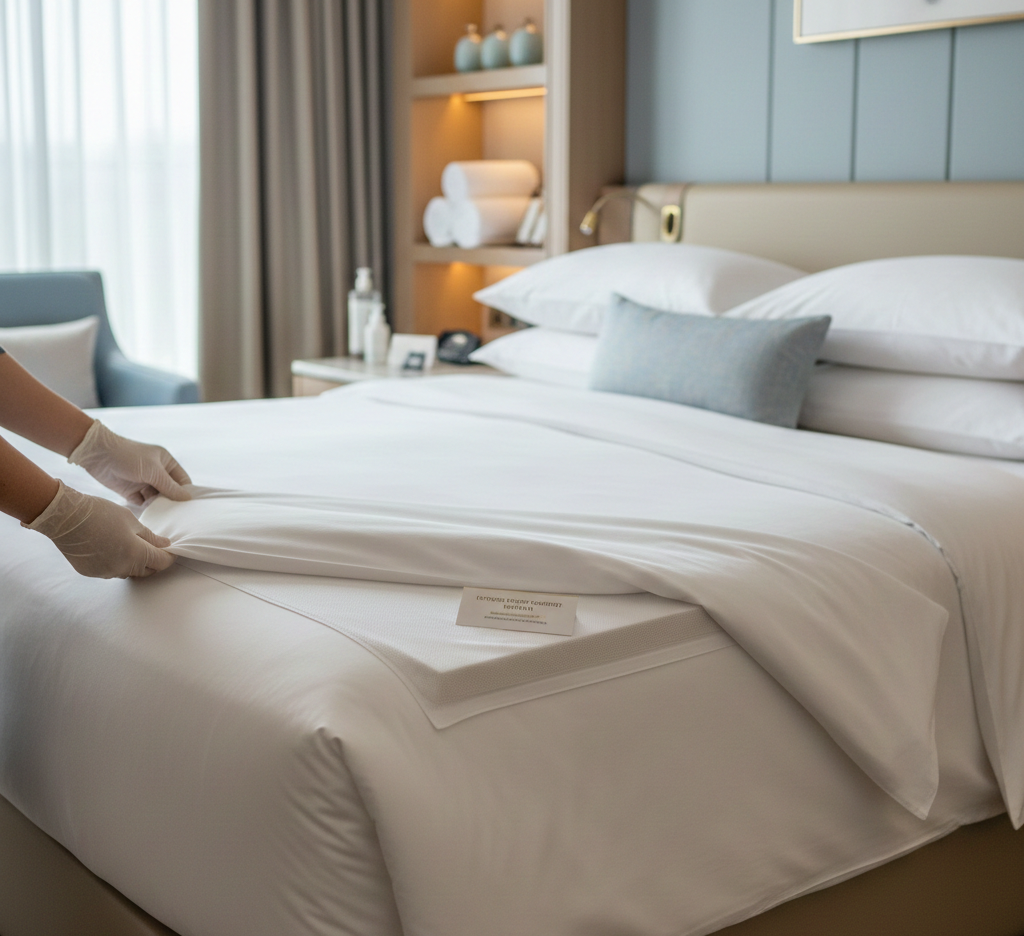
In a luxury hotel, the bed is more than a place to sleep. It is often the first physical interaction a guest has with the room — and the last thing they remember before checkout. While design, lighting, and amenities all shape perception, nothing influences rest and comfort quite like the sheets themselves.
For hotel operators, the bed linen is no longer a routine procurement item. It is a strategic decision that affects guest satisfaction, operational efficiency, and brand reputation over time.
Why Bed Linen Is a Strategic Purchase for Luxury Hotels
In premium hospitality, details scale quickly. A single guest room might use several sets of sheets each week, multiplied across dozens or hundreds of rooms. What looks like a simple textile choice becomes a long-term operational commitment.
Luxury hotels increasingly view bed linen as an investment rather than an expense. The right choice supports:
- consistent guest comfort,
- positive sleep-related reviews,
- lower replacement frequency,
- smoother housekeeping operations.
Conversely, poor linen decisions show up quietly but persistently — through guest complaints, faster wear, and rising laundry costs. This is why experienced hoteliers treat hotel bed linen as part of the overall guest experience strategy, not just a line item.
What Hotel Buyers Evaluate First: Beyond the Surface Feel
When procurement teams assess linen options, the initial touch matters — but it is rarely the deciding factor.
Seasoned buyers tend to think in stages:
First impression:
How does the fabric feel on day one? Is it smooth without being slippery? Crisp without feeling stiff?
Performance over time:
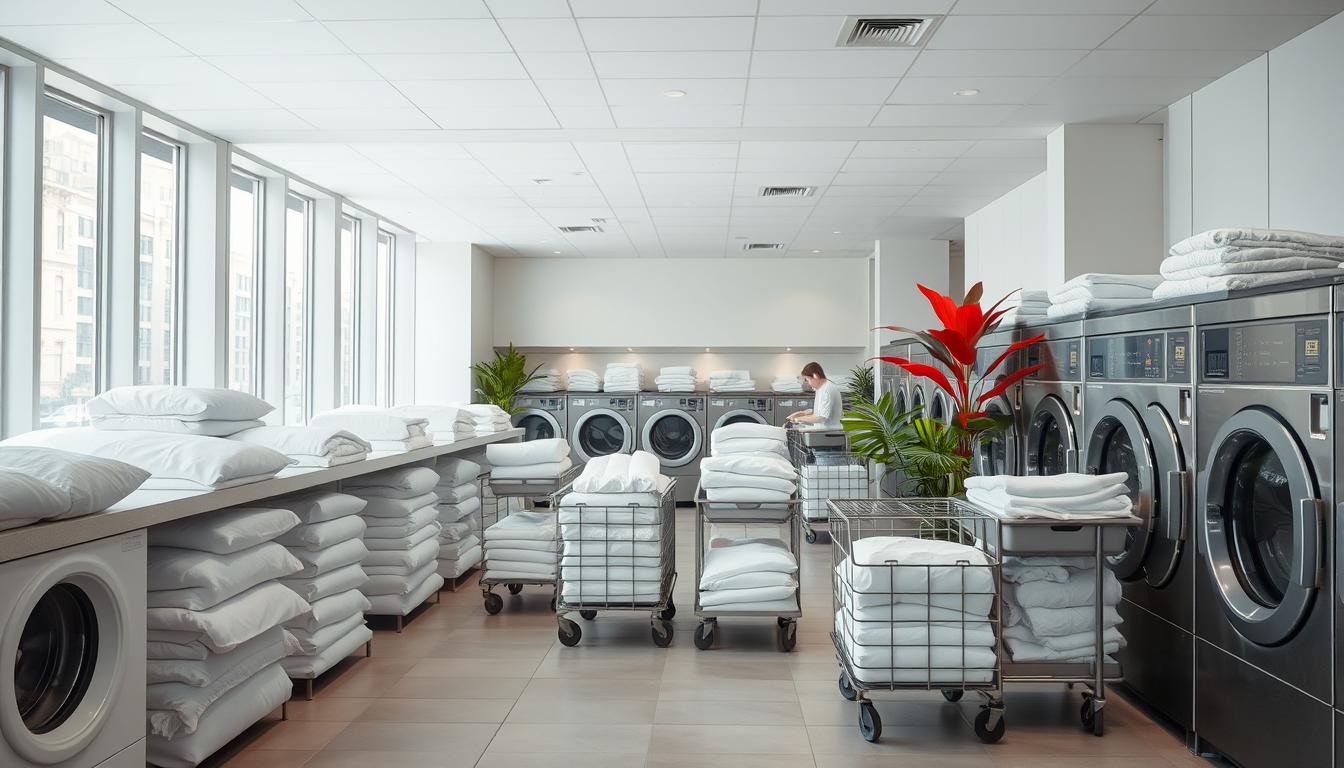
How does it behave after repeated commercial laundering? Does it retain softness, shape, and color after dozens of wash cycles?
Brand alignment:
Does the linen match the hotel’s positioning — understated luxury, modern minimalism, or classic elegance?
Fabric type, weave structure, and finishing all play a role here. Rather than chasing marketing labels, experienced buyers look for consistency and predictability. Once the initial evaluation is done, attention shifts quickly from appearance to long-term performance.
Premium Cotton vs Blended Fabrics: Understanding the Trade-Offs
Blended fabrics exist for a reason. Polyester-cotton mixes can offer advantages such as reduced wrinkling, faster drying times, and lower upfront cost. For some hotel categories, these benefits make sense.
However, luxury properties in the Middle East often lean toward premium cotton hotel sheets — not because they are trend-driven, but because of how guests respond to them.
Why premium cotton is favored:
- superior breathability,
- natural softness that improves with proper care,
- a more refined hand feel associated with high-end stays.
That said, cotton is not without risk. Lower-grade cotton may shrink, lose strength, or become rough over time. This is where sourcing quality becomes critical. Luxury hotels are not simply choosing cotton; they are choosing the right cotton, woven and finished for commercial hospitality use.
Thread Count Myths and What Really Determines Durability
Thread count is one of the most misunderstood metrics in hotel textiles. While higher numbers are often associated with luxury, they do not automatically translate to better performance.
In practice, durability depends more on:
- yarn quality,
- weave construction,
- finishing processes.
A well-made sheet with a balanced thread count can outperform a higher-count alternative made with weaker yarns. Hotels that focus exclusively on numbers often discover this only after several months of laundering.
Procurement teams that prioritize real-world testing and supplier transparency tend to avoid this trap. Instead of asking “How high is the thread count?”, they ask “How does this fabric perform after repeated use?”
Climate Factors That Impact Hospitality Textiles
Climate plays a major role in linen selection across the world. High temperatures, humidity in coastal areas, and heavy air-conditioning all influence how guests experience bedding.
Luxury hotels in these markets often prioritize:
- breathability to reduce heat retention,
- moisture management for comfort through the night,
- fabrics that remain comfortable under continuous AC use.
This is one reason luxury bed linens for hotels in the region are rarely chosen based on global standards alone. Local climate conditions demand fabrics that balance comfort with resilience, especially in properties with year-round high occupancy.
Choosing the Right Luxury Bed Linen Supplier
At the luxury level, the supplier relationship matters as much as the product itself. Hotels are not simply buying sheets; they are committing to consistency across rooms, seasons, and years.
A reliable luxury bed linen supplier typically offers:
- consistent quality across batches,
- clear specifications and testing standards,
- the ability to customize sizes or finishes,
- dependable lead times and after-sales support.
For hotels operating multiple properties or planning future expansions, supplier stability becomes a form of risk management. Reliable sourcing ensures that guest experience remains consistent, even as operations scale.
Bringing the Decision Together
Luxury hotels operate in one of the world’s most competitive hospitality landscapes. Guests arrive with high expectations, shaped by global travel experiences and local standards of excellence.
Choosing the right bed linen is not about chasing trends or marketing terms. It is about understanding how fabric, performance, climate, and supplier reliability intersect to support long-term brand value.
When approached thoughtfully, bed linen becomes an invisible strength — rarely noticed when done right, but immediately felt when done wrong.